Research Project for Heat waves in Dhaka: Health Impacts, Adaptation Strategies, and Mitigation Approaches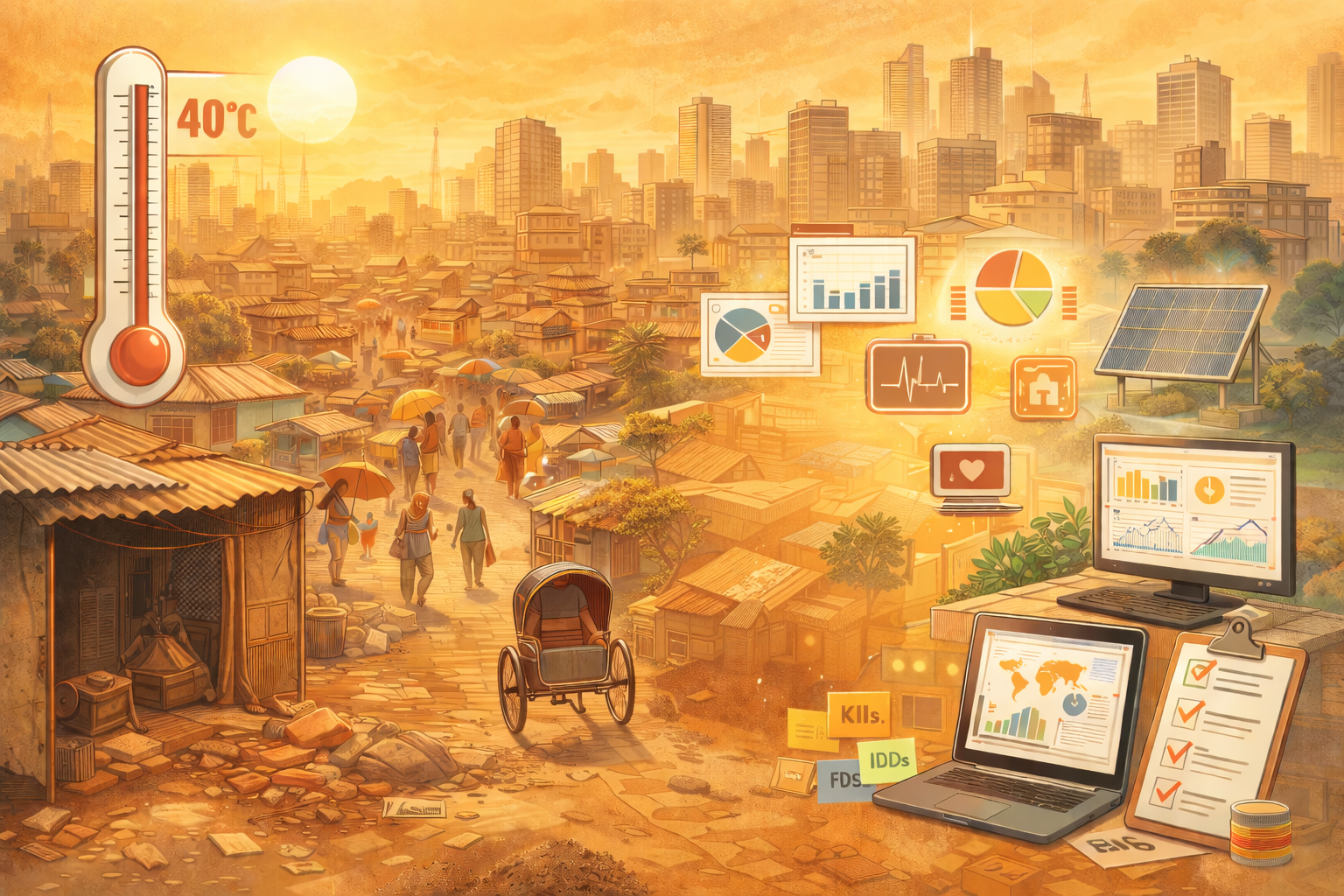 |
|
| Location | Dhaka |
| Client | Social Science Research Council (SSRC), Planning Division, Ministry of Planning |
| duration | September 2025 - August 2027 |
Dhaka, one of the world’s most climate-exposed megacities, is increasingly vulnerable to extreme heat events driven by climate change and rapid urbanization. In recent years, heatwaves have become more frequent, prolonged, and intense, with temperatures exceeding 40°C. The city’s dense built environment, limited green cover, and pronounced urban heat island effect significantly amplify heat exposure and associated health risks. These impacts disproportionately affect vulnerable populations, including older adults, children, low-income households, informal settlement residents, and outdoor workers. Despite the escalating heat risk, there remains a critical gap in city-specific evidence to inform public health responses, climate adaptation planning, and urban design interventions in Dhaka. This research project was designed to address this gap by systematically assessing the health impacts of heatwaves, evaluating existing adaptation practices, and identifying feasible and context-appropriate mitigation measures. Adopting a mixed-methods approach, the study conducted household surveys with 400 respondents across Dhaka North City Corporation (DNCC) and Dhaka South City Corporation (DSCC), with deliberate inclusion of vulnerable population groups. Qualitative insights were gathered through Key Informant Interviews (KIIs), In-Depth Interviews (IDIs), and Focus Group Discussions (FGDs) involving policymakers, public health professionals, urban planners, and community representatives. Quantitative and qualitative analyses were integrated to examine how heat exposure, sensitivity, and adaptive capacity interact to shape health outcomes. PLANCON provided a comprehensive range of professional services to ensure the effective design, implementation, and successful completion of the study. The scope of work covered research design, field implementation, data analysis, and policy-oriented outputs aligned with the project objectives. Key services included:
|
|