Consultancy Services for Field Data Collection, Compilation, Analysis, and Interpretation of Results (Qualitative & Quantitative) for the Feasibility Study of Integrated Reforms Management Project (IRMP)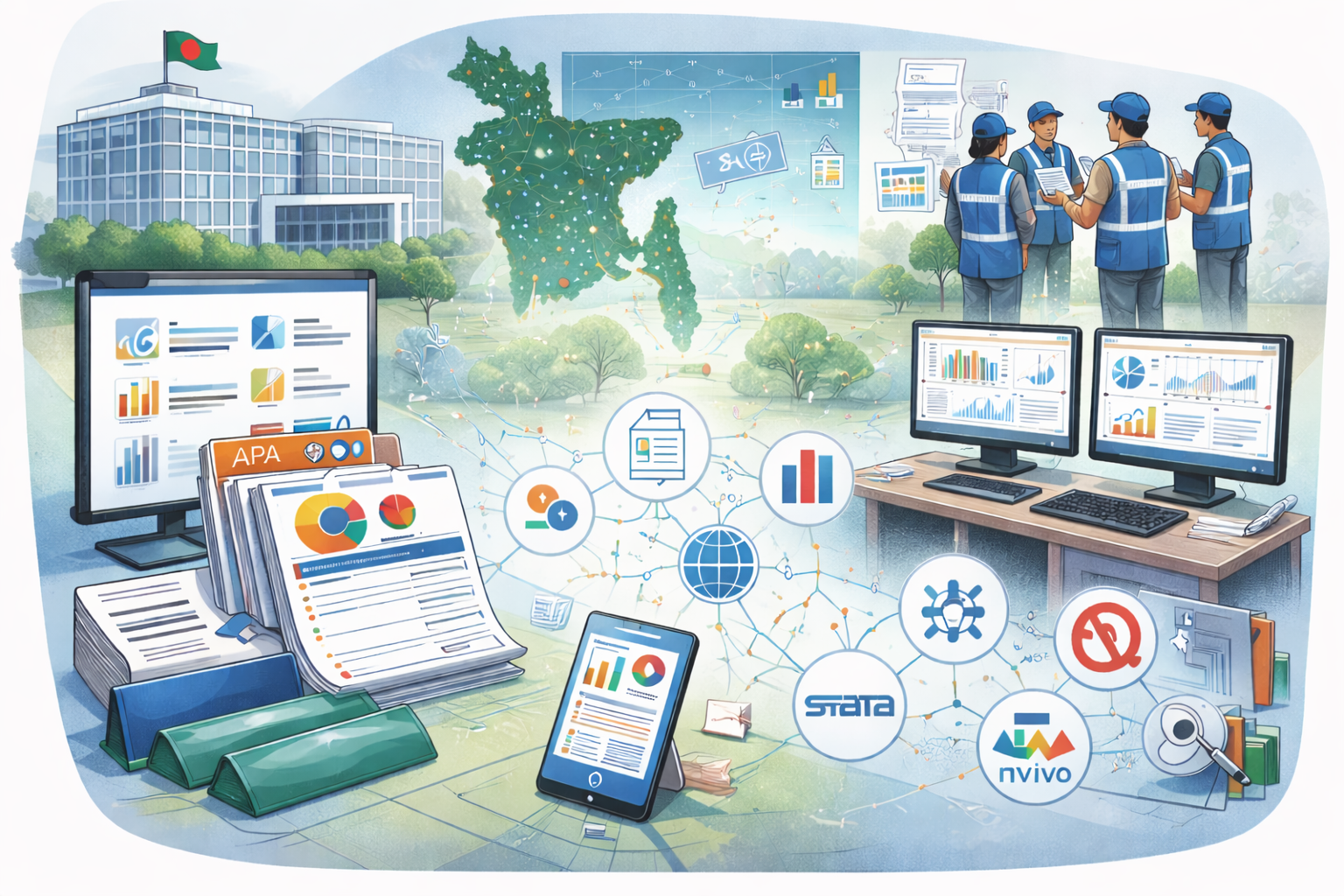 |
|
| Location | Rangpur, Rajshahi, Khulna, Barishal, Dhaka, Sylhet, and Chattogram, Bangladesh |
| Client | Bangladesh Institute of Governance and Management |
| duration | June 2023 - August 2023 |
The Government of Bangladesh has undertaken a wide range of pragmatic reform initiatives aimed at enhancing efficiency, transparency, and accountability in public administration. Notable reforms include the introduction of the Annual Performance Agreement (APA) system in FY 2014–15, which is now implemented across all levels of government from ministries to upazilas. In addition, the Citizen’s Charter has been institutionalized in all government offices to ensure timely delivery of public services within predefined standards. To strengthen good governance and promote integrity in both public and private institutions, the government formulated the National Integrity Strategy (NIS) in 2012. Furthermore, an online grievance redress mechanism has been established to address citizen complaints regarding public service delivery, alongside the introduction of weekly public hearings at all Deputy Commissioner offices, enabling citizens to directly present their grievances and concerns. While these initiatives reflect strong political commitment and effective policy interventions, in some cases the intended outcomes have not been fully realized due to coordination gaps and the absence of an integrated reform management framework. At the same time, rapid technological advancement, economic progress, and rising citizen expectations have created a demand for a more coordinated, data-driven, and integrated approach to public sector reform. Within this context, the Feasibility Study of the Integrated Reforms Management Project (IRMP) was undertaken to assess existing reform initiatives and generate evidence-based insights to support the design of a more cohesive and effective reform management system. The consulting team provided the following services under the assignment:
|
|